
Will AI Replace My Job? What the 2026 Data Actually Says
Watch on YouTube: https://youtu.be/KKOzfAsDWPw
Key takeaways
- Ask which of your tasks AI can do, not whether your whole job disappears.
- Big studies (BCG, WEF, McKinsey, Stanford, Anthropic) point to more reshaping than mass elimination.
- An early warning sign in the data is weaker hiring for young, entry-level people in AI-exposed roles—not only layoffs.
- A simple 3-question check helps you see how exposed your role is.
- Start this week by spotting routine tasks AI can draft, then checking the output yourself.
Chapters
- 00:00 Will AI replace your job?
- 00:28 Jobs vs. tasks: the question everyone gets wrong
- 01:36 What the big studies actually say
- 03:49 Who is really at risk right now
- 05:51 Is YOUR job exposed? A 3-question check
- 07:43 What to do about it (starting this week)
- 08:32 The takeaway
FAQ
Will AI replace my job in 2026?
For most people, research points to reshaping rather than elimination. BCG estimated 50–55% of US jobs reshaped in two to three years, with 10–15% potentially eliminated on a slower timeline. Your risk depends on how many of your tasks are routine information work.
Which jobs are most exposed to AI?
Studies and exposure maps repeatedly flag roles heavy on routine information work—data entry, tax preparation, bookkeeping, and basic customer support—among the most exposed. Jobs that need a body, trust, or judgment are generally harder for AI.
Who is being hit hardest by AI at work right now?
Stanford researchers using ADP payroll data found no economy-wide mass displacement through June 2026, but young workers aged 22–25 in the most AI-exposed jobs were about 19% below where they would have been versus less-exposed peers—mostly through weaker hiring, not firing.
How can I tell if my job is exposed to AI?
Ask three questions: how much of your day is routine information work; how much needs a body, trust, or judgment; and whether you are early in an exposed field. High routine work plus junior status is where the early pressure shows up.
Sources
- BCG (2026): AI Will Reshape More Jobs Than It Replaces
- World Economic Forum: Future of Jobs Report 2025
- McKinsey Global Institute: Workforce in motion
- Brynjolfsson, Chandar & Chen, Stanford Digital Economy Lab: "Canaries in the Coal Mine?" (Aug 2026 update)
- Anthropic Economic Index report: Economic primitives (Jan 2026; Nov 2025 data: 52% augmentation / 45% automation)
- NeedsAHuman: Fear of AI taking over jobs vs. the data (search interest vs. exposure)
- PathScorer AI exposure map (most exposed: tax preparers, data entry, bookkeeping, basic support)
Want more like this?
Calm, sourced videos on AI and work — no doom scroll.
Related videos
 8:48
Why AI Is Making First Jobs Harder (2026 Research)
Is AI making it harder to get your first job? New research from the Banque de France, the US Census Bureau, Stanford, and a 41-country study by King's College London says: it's not mass layoffs, it's fewer young people being hired. In Part 2 of our series we look at the data, the fair counterpoint (remote work), what it means for graduates and parents, and 5 practical ways to still get in.
 8:53
The AI Skills Employers Want Now (Beyond Prompting)
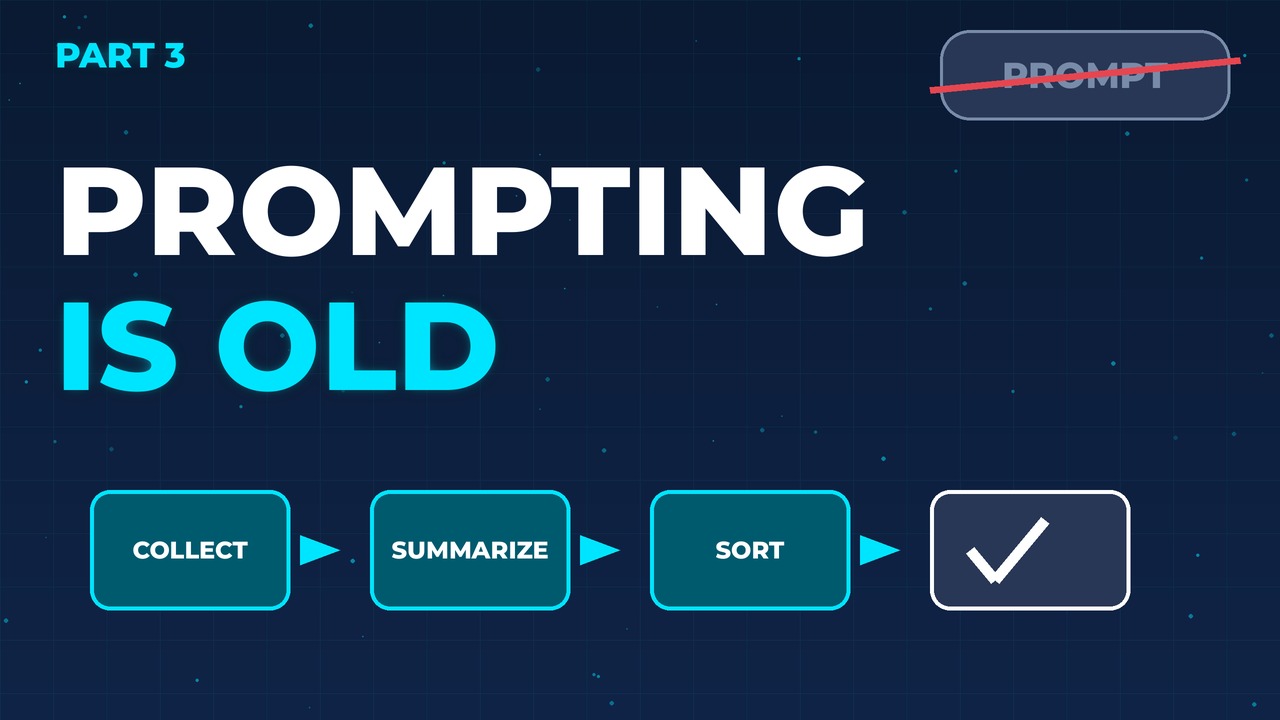
Is "learn to prompt" still the AI skill to have? New hiring data says companies are already moving on. Workday's October 2026 Global Workforce Report found demand for basic AI skills like simple prompting peaked in January 2026 and then fell 25%, while hands-on skills like automating workflows rose 51%. In Part 3 of our series, we explain what that means for normal office workers, show a no-code example of automating a weekly report, and give you 5 steps to start this week.